


ETEK EKEPC2 EV Charger Station Cable Socket Controller 32A AC 240V with RCMU LCD DLB CT Electronic Protocol
-
Estimated Delivery:Oct 02 - Oct 06
-
Free Shipping & Returns: On all orders

ETEK EKEPC2 EV Charger Station Cable Socket Controller 32A AC 240V with RCMU LCD DLB CT Electronic Protocol
SPECIFICATIONS
Brand Name: NONE
Certification: CE
Choice: yes
High-concerned chemical: none
Is Smart Device: no
Maximum Current: 32A
Model Number: ekepc2
Origin: Mainland China
is_customized: Yes
semi_Choice: yes
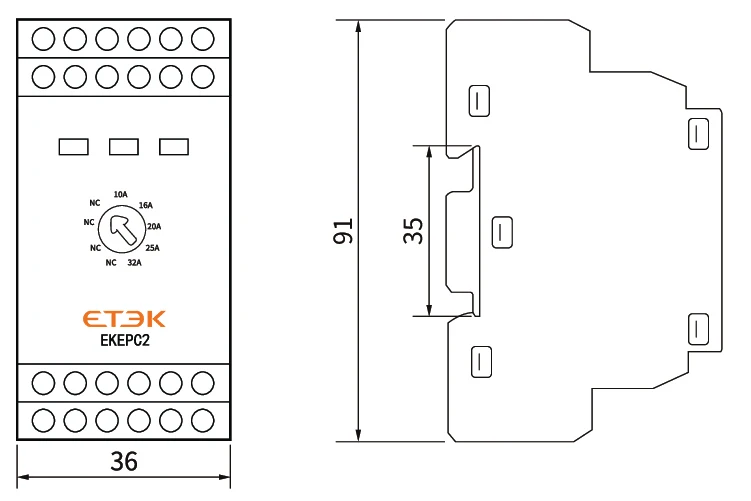
Overall dimension(mm)
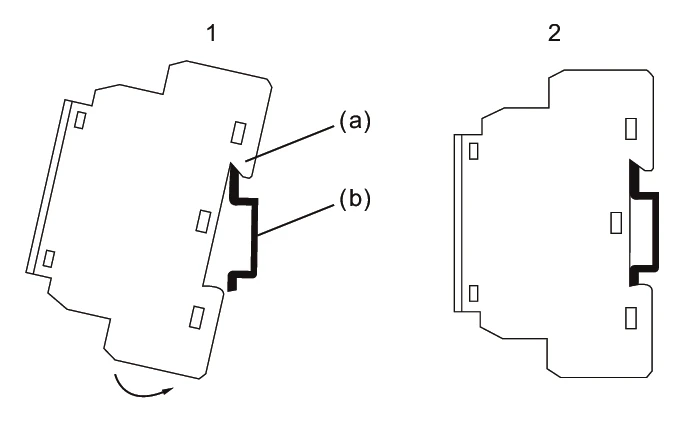
2: Rotate the controller down until the clip into the Din
1: Install the controller (a) vertically onto the horizontal DIN rail (b)
Easy installation
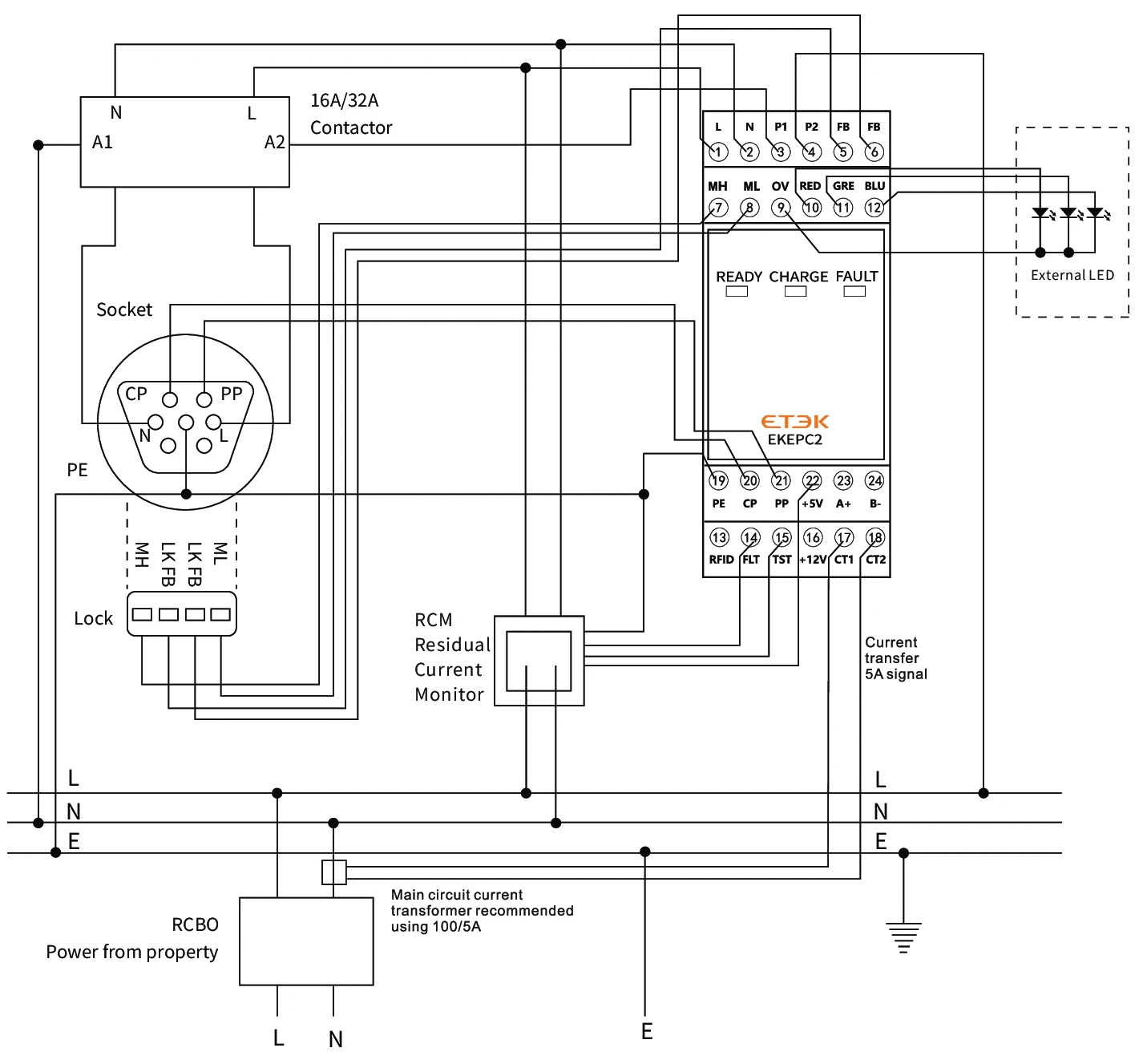
Application circuit diagram
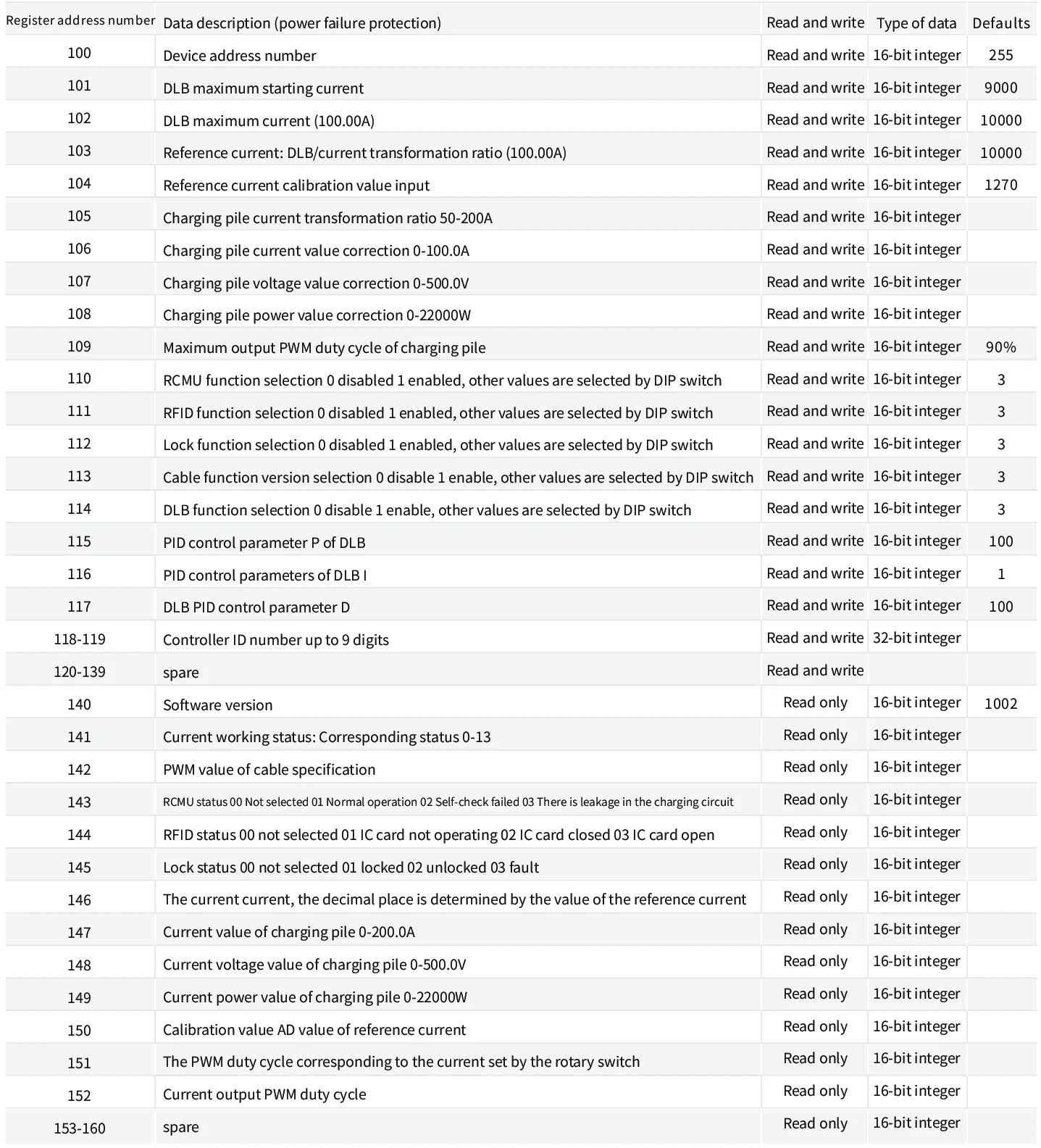
Modbus-RTUmodel , Baud rate: 38400, fixed , address: 1-255default : 255(Broadcast address )
RS485 Communication description
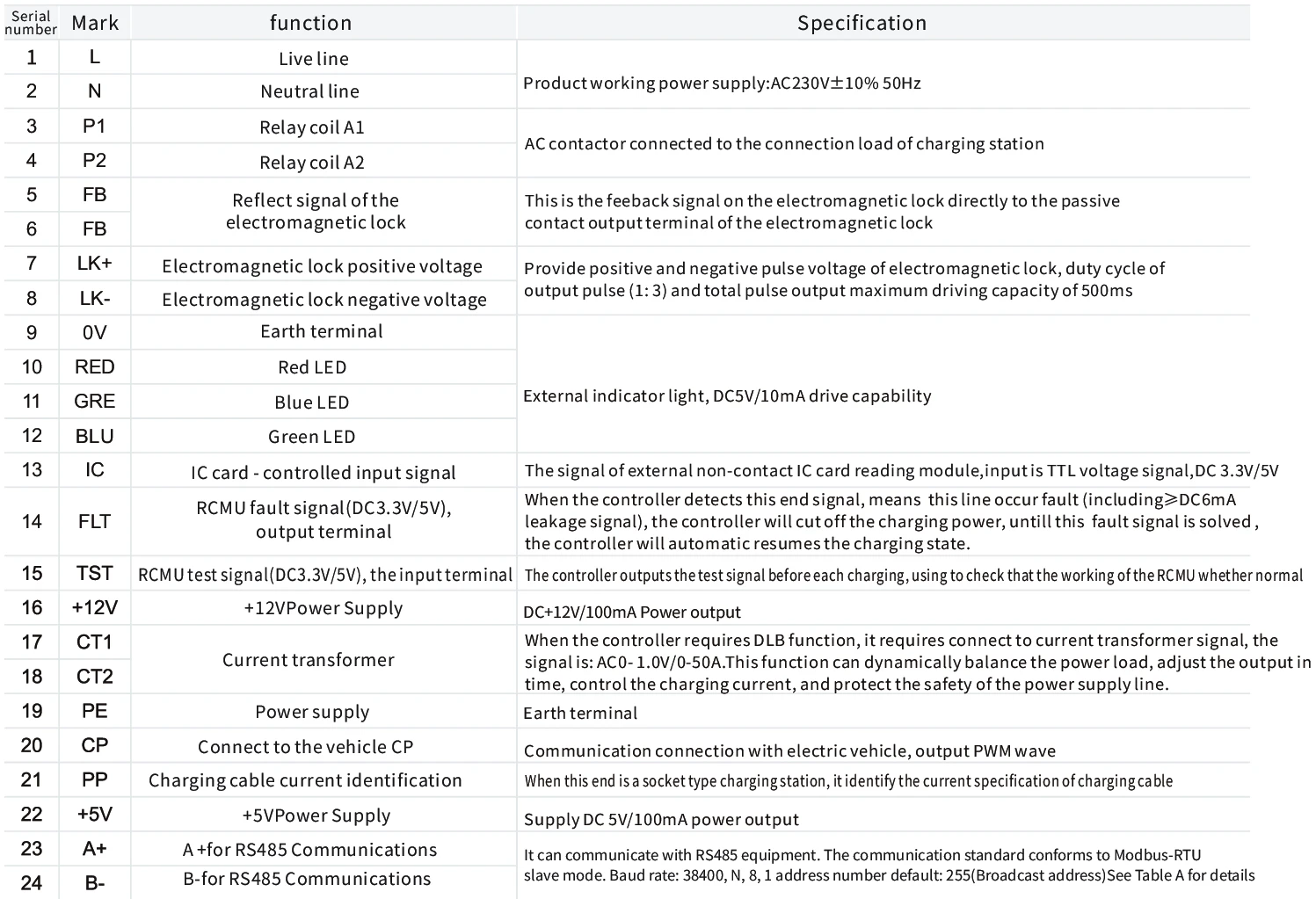
Terminal function description
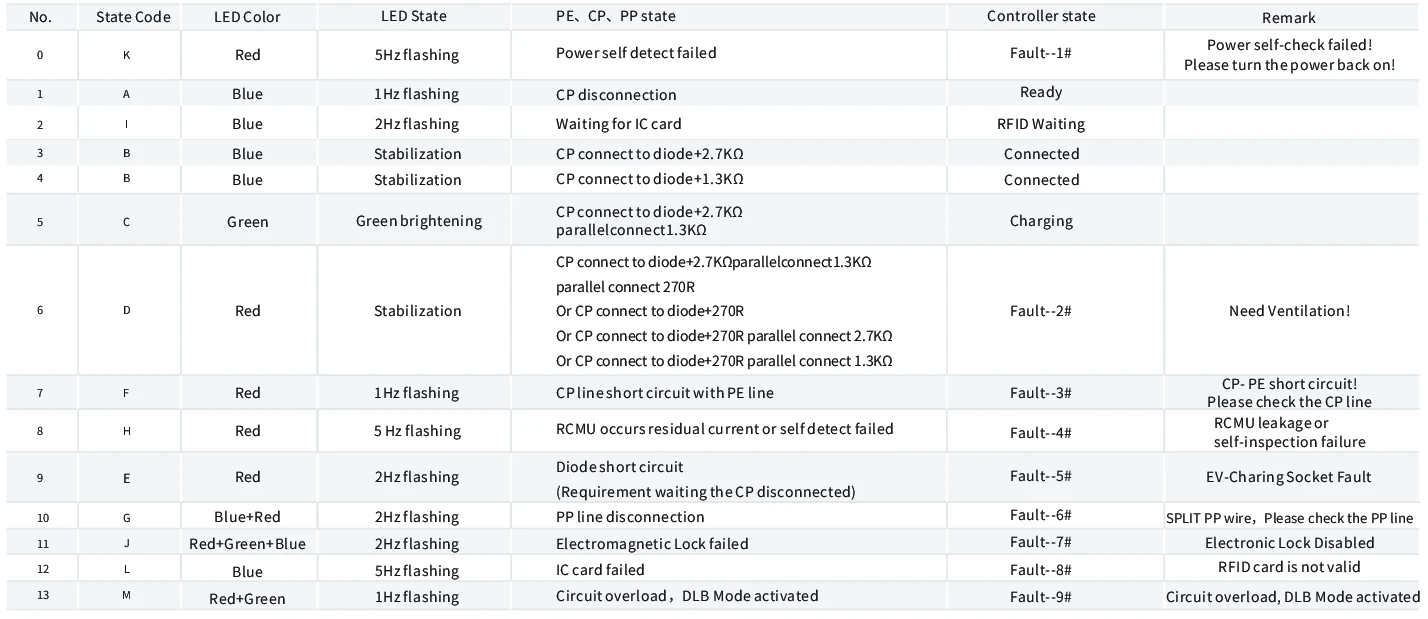
Controller connection status
Cleaning off the unit is not allowed, EPC charging controller is maintenance free.
Danger: Voltage hazard.
Warning There is no replaceable fuse inside EPC When replacing, make sure that the device and the components associated with the device are not energized.
5. Turn on the switch and the main power.
4. Reconnect the line (On).
3. Installation: connect the rear lock clipper to the DIN rail and swing until the lock clipper was put in.
2. Pull the latch down from the back of the unit and rotate until it is free of the DIN rail and removed.
1. Cut off the line from the EPC controller terminal.
Touching any running parts will cause serious injury. Please cut off the power before operation. Process:
Replacement device
The EPC controller will stop the relay output after detecting that the power branch is cut off.
According to IEC61851, it is required to cut off the power branch when the charging process is completed within 100ms.
Cutting off the power branch
We recommend connection with 230/400V 10kA curve B RCCB.
Relay output
OV control point shall be consistent with the expected current of the factory. The connection of EPC Controller to OV is functional grounding, and the reliability of connection must be guaranteed, otherwise personal injury or property loss will be caused.
2. Firstly connect the ground wire (PE line) of the vehicle charging terminal interface to the OV control point of the EPC controller, and then connect other lines in order. Do not use terminal blocks or EPC controller to connect the device from the outside at OV control point.
1. Connect "CP" directly to the interface of vehicle charging terminal.
Functional grounding
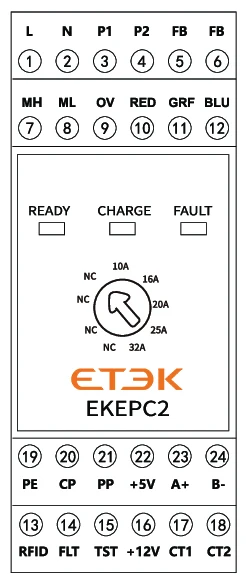
Terminal description of the controller
After the charging plug linkage, and if the vehicle is in state C, the controller keeps the P1/P2 closed (charger connected), the LED becomes stable green, and the EV starts into charging mode. If the display status D( requires ventilation), because the controller does not have the heat dissipation function, the controller puts the P1/P2 on (charger off) simultaneously (close the electromagnetic lock switch), the head interlock fails and the controller turns off the charging program, the LED becomes stable red.
After connected on the working voltage, the controller starts to initialize (self - detection procedure on the RCMU module) and conduct self - detection function (LED cycle flashing), waiting for the car to connect. The controller waits for the charging cable and the vehicle connection (status A), and the LED keeps flashing blue light, and this process requires about 6s waiting. If this controller connected the matched cable (status B), LED becomes stable blue light (and opens the electromagnetic lock switch).
Controller charging procedure
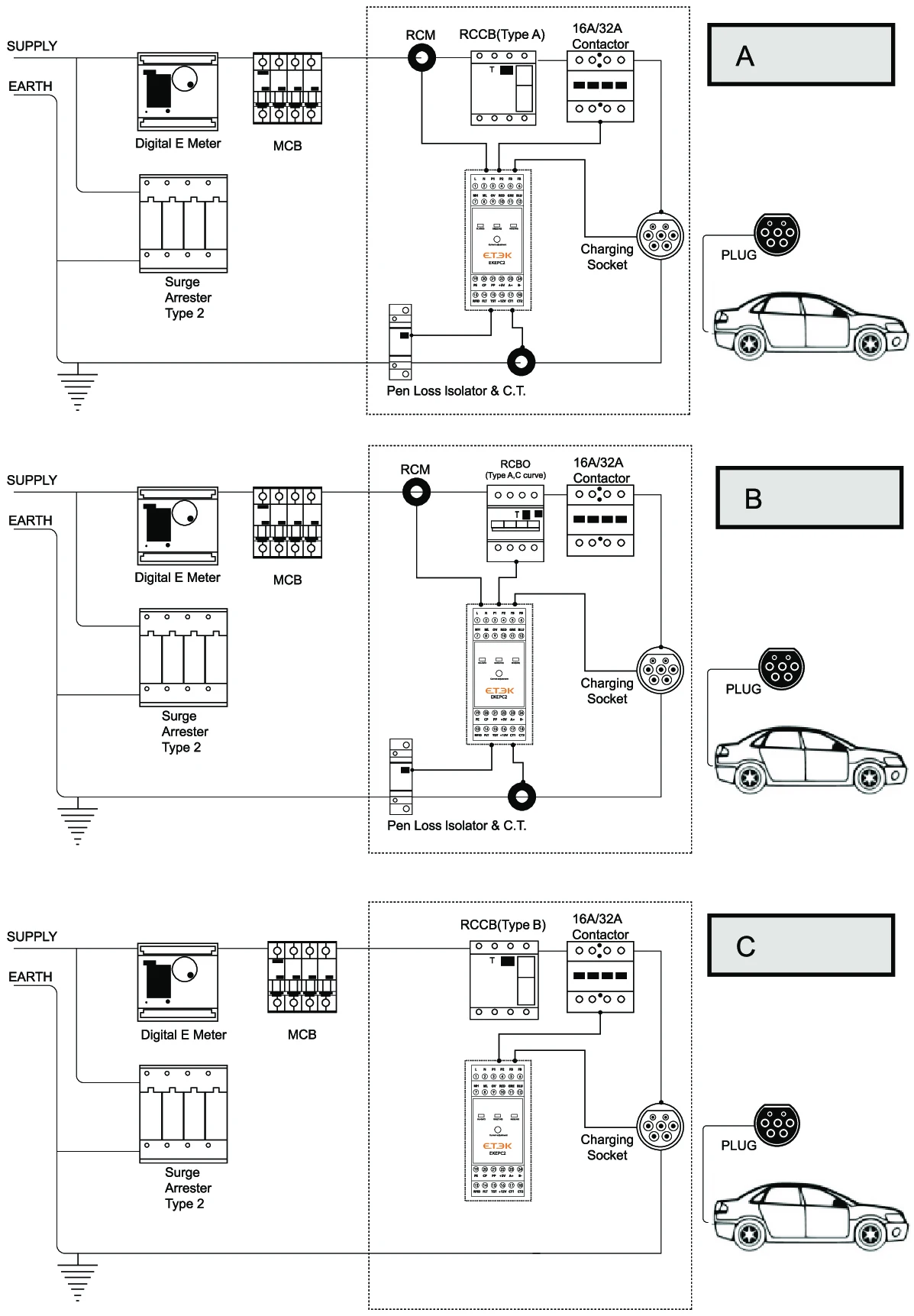
For example, item C with 1 pes type B circuit breaker and 1 pcs contactor, item A, B with 1pcs type A circuit breaker plus RCMU module and 1 contactor.
The following is a schematic diagram of an application case.
Application cases
The controller additional functions include: non-contact IC card connection module, DC leakage detection module (RCMU), RS485 communication interface equipment, plug lock device, external emergency stop button, etc.
The operating status of the EV interface is indicated by three-color LED lights.
The output of the relay is used to connect the AC contactor that switches on/off the load.
Conform to DIN EN60715 installation requirements.
Control the communication of the electric vehicle AC charging process complies with IEC 61851 or SAEJ1772 standards.
Scope of use
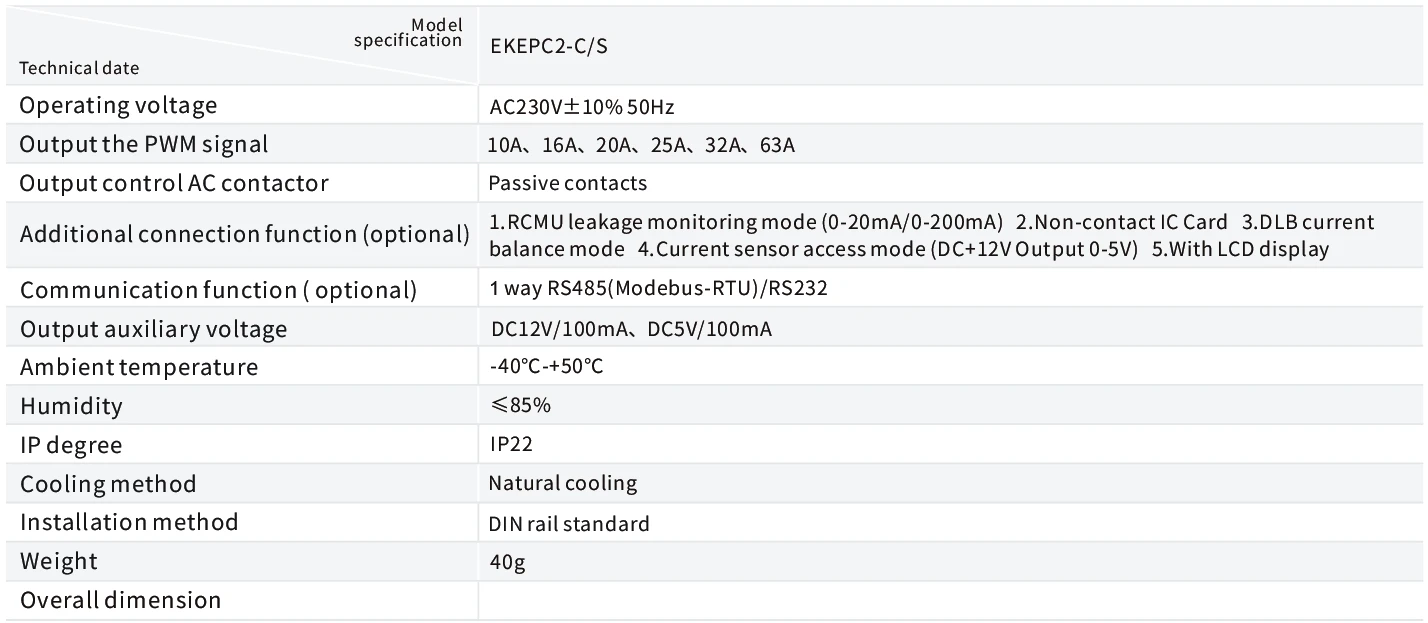
Technical Data
(4) "C": with cable version" means that the charging cable is permanently connected to the controller; Pl/P2 terminal is connected to the AC contactor providing the charging load. The rated value of Curve B circuit breaker shall be selected within the maximum current range circuit breaker shall be selected within the maximum current range.
(3) "C" for the cable version and "S" for the socket (without cable) version
(2) Maximum charging capacity indication 10A, 16A, 20A, 25A, 32A, Through the internal dial switch (The factory default setting is 32A)
(1) Software correction instructions, such as EKEPC1 or EKEPC2
The controller is a kind of product suitable for charging pile of electric vehicle.
Description
ETEK Electric, according to the European standard IEC 61851-1, produced EV Charging Controller Control unit for charging electric vehicles, it can be used for charging almost all electric vehicles using both type 1 and type 2 plugs. The AC charging control unit is suitable for private and industrial applications and supports one charging point.
The features that characterise a smart charge controller include communication with a backend system and the associated authorisation of users, as well as the efficient distribution of load currents by means of dynamic load management to prevent an overload of the existing AC system.
The intelligence of an AC charging station or an AC charging infrastructure is largely determined by the charge controller used. A smart charge controller has the primary task of controlling and monitoring the charging process of an electrical vehicle.
Shipping cost is based on weight. Just add products to your cart and use the Shipping Calculator to see the shipping price.
We want you to be 100% satisfied with your purchase. Items can be returned or exchanged within 30 days of delivery.